
Opening the Museum
Doors to Children:
The meaning of audio
tours for kids
Estefania Luther • feb 16, 2026
Image copyright © Guide-ID
Have you ever thought about what an audio guide for children in a museum really represents? It is the museum’s first invitation to children, saying:
"Hey! Join this experience. A museum visit is also for you."
"Museums are not only for adults, and museum visits are not boring."
"Look at how many interesting things you can learn."
"Welcome, this is a place where your imagination will love to explore."
A Better Way to Engage Young Minds
Traditionally, museums place an introductory text in each exhibition room. However, for obvious reasons, not all children can or want to read it. This is where creative teams come into play. What should we do? Should we give them a kid-friendly brochure? Should we create a special room just for children? All of these are great initiatives, but the solution we truly believe in is… a kids’ audio tour.
A kids’ audio tour allows children to enjoy the museum visit together with their families. There is no need for a special area just for them. Instead, they can explore right next to mom and dad. It shows them that they are part of the same experience adults are having. It teaches them to be present, to look closely, and to pay attention to the stories being told. Most importantly, it shows them that museums are places for kids: fun, entertaining spaces where they can discover whole new worlds.
Traditionally, museums place an introductory text in each exhibition room. However, for obvious reasons, not all children can or want to read it. This is where creative teams come into play. What should we do? Should we give them a kid-friendly brochure? Should we create a special room just for children? All of these are great initiatives, but the solution we truly believe in is… a kids’ audio tour.
A kids’ audio tour allows children to enjoy the museum visit together with their families. There is no need for a special area just for them. Instead, they can explore right next to mom and dad. It shows them that they are part of the same experience adults are having. It teaches them to be present, to look closely, and to pay attention to the stories being told. Most importantly, it shows them that museums are places for kids: fun, entertaining spaces where they can discover whole new worlds.
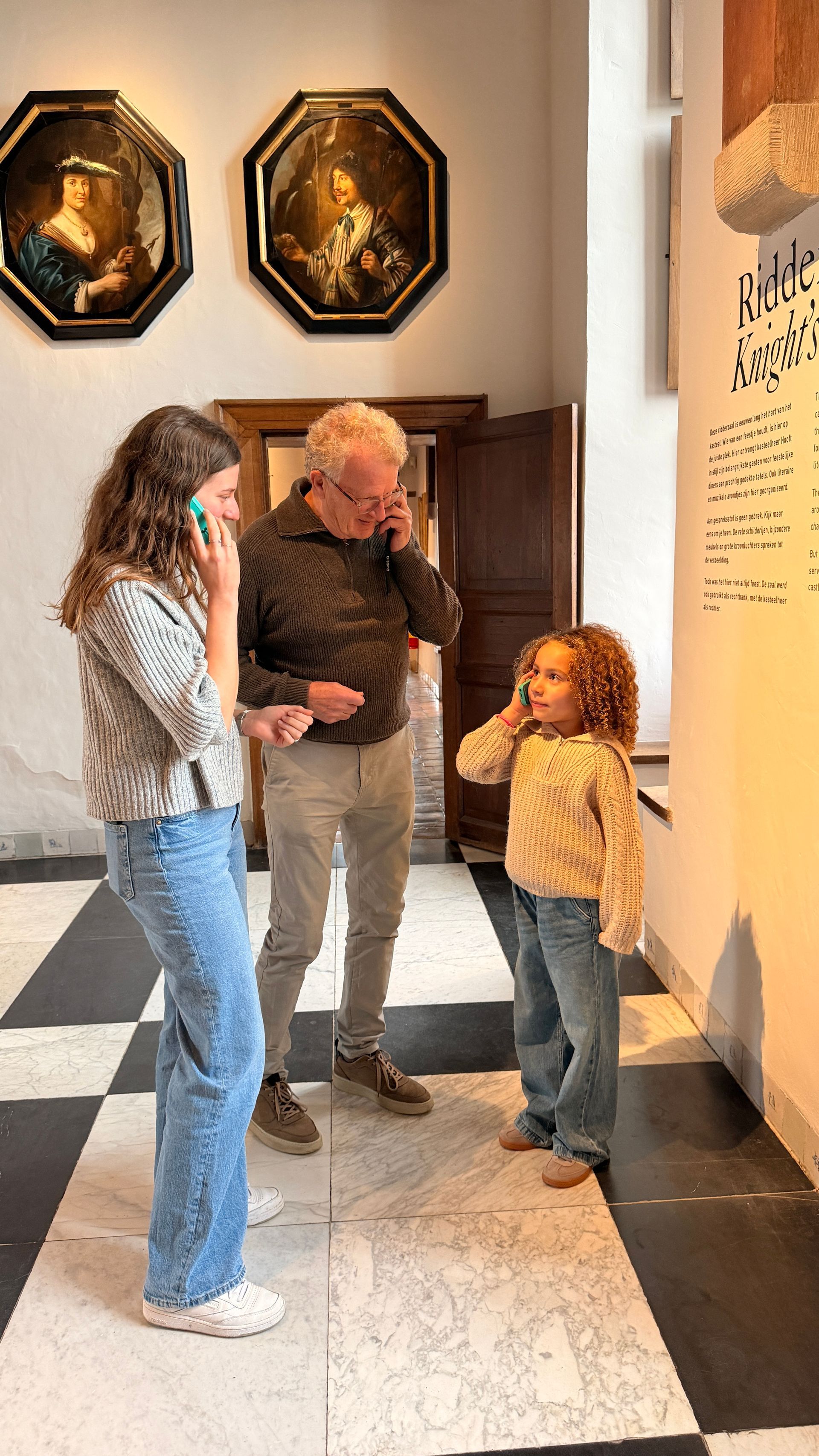
Image copyright © Guide-ID
Seeing the Museum Through a Child’s Eyes
I remember the first time my nephew used an audio guide. He was five years old, and it happened during a visit to a castle. He was completely captivated by the experience of pointing the device and hearing a story unfold. At one stop, the guide talked about the castle dungeon, where “bad people” or those in debt were once kept. I remember him asking his mom, “Mommy, do you think kids who behaved badly were also brought here?” – I guess he could easily imagine himself in that situation.
Looking back now, a few years later, that moment reveals how powerful an audio guide can be. It made him pay attention, reflect on what he heard, and connect the story to his own world.
So yes, an audio guide is a powerful tool for museums that want to invite children into the experience and encourage them to learn and imagine.
Designing an Audio Guide Children Will Love
With a few simple tips in mind, you can take full advantage of your audio guide and turn it into a favorite museum device for kids. Let’s think: what are the key factors that make an audio guide appealing to children?
Inviting
An audio guide should be inviting, simple, and easy to use, so it encourages children to engage with it rather than complicating their experience.
Independence
This benefits both kids and parents. A device that allows children to explore at their own pace, choosing when and what they want to listen to, also lets parents enjoy their visit instead of constantly controlling or setting up the content.
Interesting
Engaging content is the main hook for retaining attention. This can be achieved with short explanations, ideally no longer than 30 seconds, a voice that resonates with children, and vocabulary that is easy to understand and catchy.
Interactive
An interactive audio guide makes the tour more exciting and fun. You can achieve this by asking questions during the narration, encouraging children to look for specific objects in the exhibition, or by using Podcatcher features such as games and quizzes.
I remember the first time my nephew used an audio guide. He was five years old, and it happened during a visit to a castle. He was completely captivated by the experience of pointing the device and hearing a story unfold. At one stop, the guide talked about the castle dungeon, where “bad people” or those in debt were once kept. I remember him asking his mom, “Mommy, do you think kids who behaved badly were also brought here?” – I guess he could easily imagine himself in that situation.
Looking back now, a few years later, that moment reveals how powerful an audio guide can be. It made him pay attention, reflect on what he heard, and connect the story to his own world.
So yes, an audio guide is a powerful tool for museums that want to invite children into the experience and encourage them to learn and imagine.
Designing an Audio Guide Children Will Love
With a few simple tips in mind, you can take full advantage of your audio guide and turn it into a favorite museum device for kids. Let’s think: what are the key factors that make an audio guide appealing to children?
Inviting
An audio guide should be inviting, simple, and easy to use, so it encourages children to engage with it rather than complicating their experience.
Independence
This benefits both kids and parents. A device that allows children to explore at their own pace, choosing when and what they want to listen to, also lets parents enjoy their visit instead of constantly controlling or setting up the content.
Interesting
Engaging content is the main hook for retaining attention. This can be achieved with short explanations, ideally no longer than 30 seconds, a voice that resonates with children, and vocabulary that is easy to understand and catchy.
Interactive
An interactive audio guide makes the tour more exciting and fun. You can achieve this by asking questions during the narration, encouraging children to look for specific objects in the exhibition, or by using Podcatcher features such as games and quizzes.
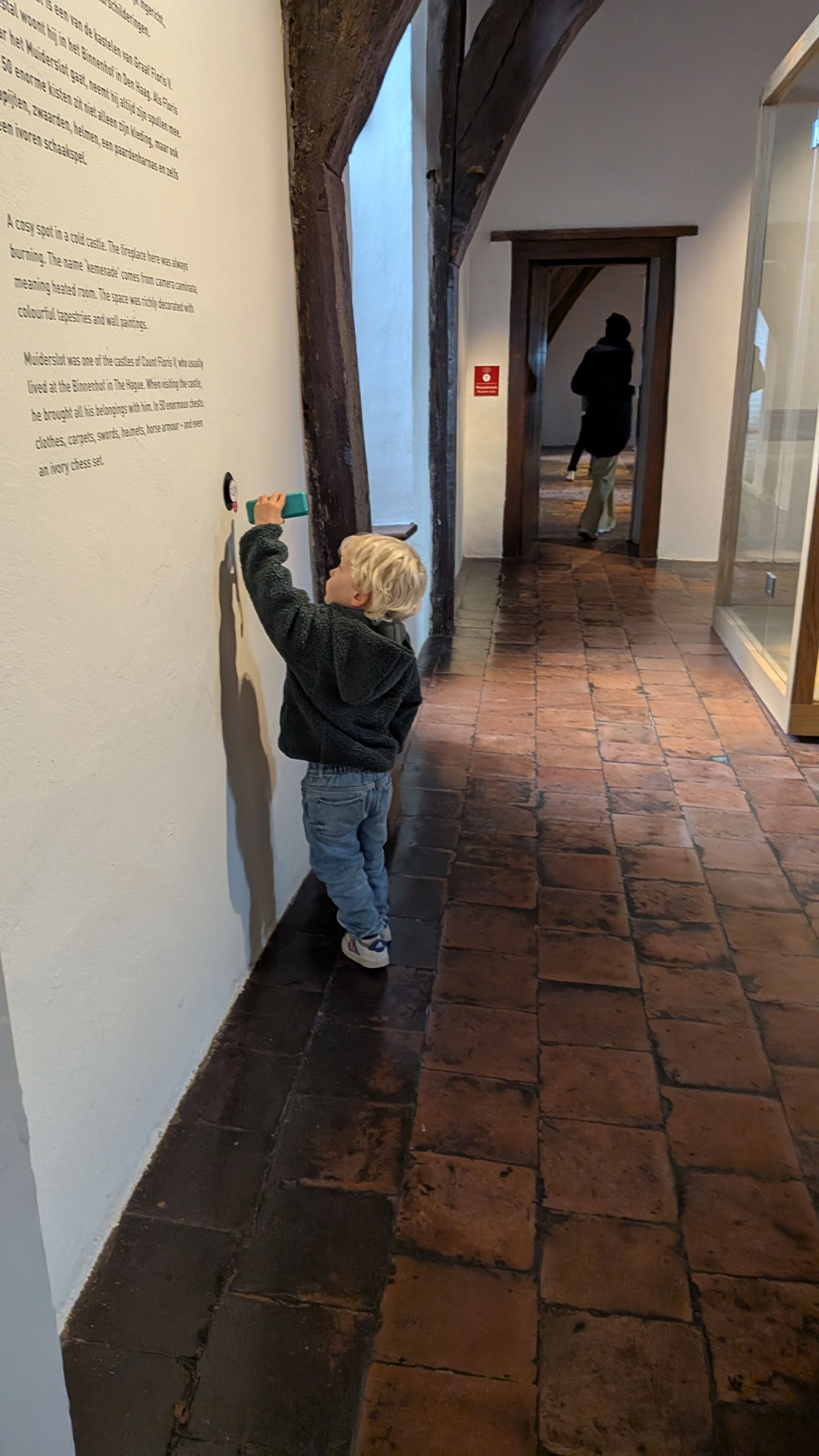
Image copyright © Guide-ID
How does Game and Quizzes work with the Podcatcher?
When creating a tour, you can use different layers of content to make the experience more fun and interactive. One exciting option is adding quizzes or short surveys directly into the tour using the tour editor. This allows tour creators to turn regular stops into playful moments where children can listen, think, and respond.
At certain stops, children can be asked a multiple-choice question. They answer by pressing the arrow buttons on the Podcatcher, making it feel like a game rather than a lesson. Each interactive moment begins with a short introduction, followed by the question. Once a child selects an answer, the Podcatcher plays an audio response linked to that choice. If the answer is not correct, the question is repeated so they can try again. When they choose the correct answer, the game moves on.
This feature is perfect for children’s tours because it can be used for quizzes, fun facts, trivia, or even treasure-hunt style challenges. It keeps children curious, active, and involved throughout the tour.
To make it even more exciting, the smart scoring feature tracks how many answers are correct. At the end of the tour, children receive a score, and the Podcatcher’s Smart Center lights up to show their results. This adds a sense of achievement and makes the tour feel like a rewarding adventure rather than just a walk and listen experience.
By simply using these ideas in your audio tour , you can be sure you’ll create an extraordinary experience for your young audience. This approach helps them learn by being present and teaches them the magic of real-life experiences, instead of the constant technological buzz that absorbs today’s younger generation.
Make your museum a place of learning and presence, where children feel excited to participate and eager to return.
If you’d like to learn more about how to introduce games and quizzes using Podcatcher, feel free to reach out to us. We’ll be happy to guide you step by step and help make it happen.
When creating a tour, you can use different layers of content to make the experience more fun and interactive. One exciting option is adding quizzes or short surveys directly into the tour using the tour editor. This allows tour creators to turn regular stops into playful moments where children can listen, think, and respond.
At certain stops, children can be asked a multiple-choice question. They answer by pressing the arrow buttons on the Podcatcher, making it feel like a game rather than a lesson. Each interactive moment begins with a short introduction, followed by the question. Once a child selects an answer, the Podcatcher plays an audio response linked to that choice. If the answer is not correct, the question is repeated so they can try again. When they choose the correct answer, the game moves on.
This feature is perfect for children’s tours because it can be used for quizzes, fun facts, trivia, or even treasure-hunt style challenges. It keeps children curious, active, and involved throughout the tour.
To make it even more exciting, the smart scoring feature tracks how many answers are correct. At the end of the tour, children receive a score, and the Podcatcher’s Smart Center lights up to show their results. This adds a sense of achievement and makes the tour feel like a rewarding adventure rather than just a walk and listen experience.
By simply using these ideas in your audio tour , you can be sure you’ll create an extraordinary experience for your young audience. This approach helps them learn by being present and teaches them the magic of real-life experiences, instead of the constant technological buzz that absorbs today’s younger generation.
Make your museum a place of learning and presence, where children feel excited to participate and eager to return.
If you’d like to learn more about how to introduce games and quizzes using Podcatcher, feel free to reach out to us. We’ll be happy to guide you step by step and help make it happen.
List of Services
-
Opening the MuseumOpening the Museum
Doors to Children:
The meaning of audio
tours for kids Have you ever thought about what an audio guide for children in a museum really represents? It is the museum’s first invitation to children, saying:
"Hey! Join this experience. A museum visit is also for you."
"Museums are not only for adults, and museum visits are not boring."
"Look at how many interesting things you can learn."
"Welcome, this is a place where your imagination will love to explore."
Doors to Children:
The meaning of audio
tours for kids -
Meet The Beacons: The Little Traffic Controllers of Your Exhibition Have you ever noticed when you’re wandering through an exhibit the museum audio guide in hand and suddenly the tour starts activating on it’s own and the narration begins to play — feels like magic, right? But there’s actually a technology behind it. Spoiler: it’s not Wi-Fi, and it’s not magnetic attraction either (well… kind of).Meet The Beacons: The Little Traffic Controllers of Your Exhibition
-
What Would Be the Best Tour Guide System for Groups? Tourism is booming. No matter where you go, every place has a story to tell. Millions of people around the world are eager to dive into adventure and uncover the secrets of towns, landmarks, museums, nature parks, and more. Whether on foot, by bus, or by boat, everyone is excited to explore.What Would Be the Best Tour Guide System for Groups?
-
How to Increase Museum Engagement with AudioHow to Increase Museum Engagement with Audio
TIPS and TRICKS Gaining real engagement today can be a challenge for museums and cultural spaces. The diversity of languages, ages, and interests makes it difficult to find the right approach for each visitor, and to truly connect with them.
But, how can museums improve engagement and offer visitors a truly memorable experience? There are several important factors to consider, such as identifying your audience, choosing the right type of content, determining the ideal tour duration, and selecting appropriate vocabulary and tone for narration.
So today, we’ve put together some helpful tips and tricks to show you the best ways to achieve real engagement in your space.
TIPS and TRICKS -
Guide-ID’s Ultimate Duo:
When hardware and software merge their super powers Batman and Robin, Mario and Luigi, Sherlock and Watson, Han Solo & Chewbacca—what do they have in common? They’re some of the most iconic duos of all time. And today, we have a new one to add to the list. Ready? Drums please… The Podcatcher Pro & Its Tour Editor Platform!
Guide-ID’s Ultimate Duo:
When hardware and software merge their super powers -
AI Meets Audio: How Guide-ID Is Helping Museums Rethink Tour Creation From faster workflows to multilingual storytelling, Guide-ID’s smart AI tools are changing the way museums engage their visitors.AI Meets Audio: How Guide-ID Is Helping Museums Rethink Tour Creation